

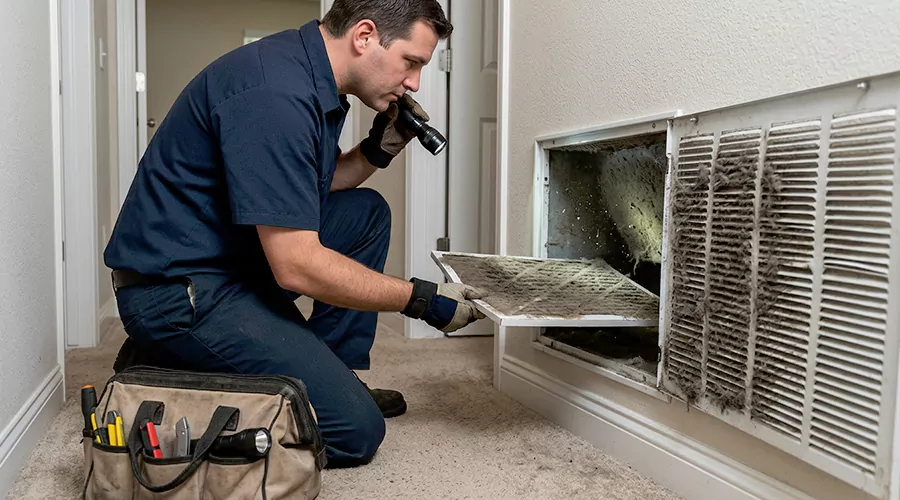
A dirty return air vent usually develops when household dust collects on the grille as air moves back toward the HVAC system. Return vents continuously draw indoor air through their openings, which makes them common collection points for lint and other airborne particles. Although some buildup is expected, heavy deposits can restrict airflow and may indicate an issue with maintenance or indoor dust levels.
Return vents perform a different job from the supply vents that deliver heated or cooled air into rooms. Their purpose is to collect air from the living space and direct it toward the filtration and heating or cooling equipment. Because this air has not necessarily passed through the system's filter yet, dust can accumulate around the return opening even when the filter is functioning correctly. Understanding how the return system works can help distinguish ordinary dust collection from a more serious airflow problem.
What Causes a Return Air Vent to Get Dirty?
Return vents become dirty because they continuously handle air containing household particles. Dust from carpets and other indoor sources travels toward the grille whenever the HVAC blower operates. Some material collects on the cover while the remaining air passes into the return duct. Several household conditions can increase the amount of visible buildup.
High Levels of Household Dust
Everyday activity releases particles that eventually travel toward return openings. Walking across carpets can disturb dirt trapped between the fibers, while clothing and upholstered furniture shed small amounts of material into the air. Homes with pets may have additional particles from loose hair and skin flakes. As the HVAC system draws room air toward the return grille, some of these materials collect around its edges. This explains why return openings in busy living areas often become dirty faster than those in quieter parts of a home.
Dirty or Incorrectly Installed HVAC Filters
A heavily loaded air filter can restrict airflow through the HVAC equipment, even though it is not necessarily the direct cause of dust on the return grille. The filter is designed to capture particles passing through its material, but an incorrect size or poor fit can allow some air to bypass it. This creates a route for unfiltered particles to reach downstream components. Regularly checking both the filter material and its seating position helps maintain filtration performance. The correct filter should match the equipment manufacturer's recommendations rather than simply having the highest available rating.
Return Grille Design and Location
The shape and location of a return grille influence how quickly dust becomes visible. Narrow slats create edges where airborne particles can settle, while large openings may collect air from several connected rooms. A return near a hallway or staircase may experience more frequent air movement than one in a rarely occupied room. Low-mounted grilles can also collect pet hair or floor-level dust. These differences mean that two returns connected to the same HVAC system may look quite different without indicating a mechanical fault.
Furniture Blocking the Return Opening
Large furniture placed directly in front of a return grille can interfere with the intended airflow path. A sofa or cabinet may also create a hidden area where dust collects because the surface is difficult to reach during normal cleaning. When the HVAC system operates, some of that material can be drawn toward the opening. Moving furniture away from the grille improves access for cleaning and helps maintain an unobstructed return path. Avoid covering return openings with decorative panels that are not designed for HVAC use.
Renovation Dust Entering the Return System
Remodeling projects can release fine particles that travel throughout the home. Drywall sanding is a common source because the resulting powder can remain suspended before settling on surfaces or entering return openings. If the HVAC blower runs during dusty work, some particles may be carried into the return system. Heavy deposits can remain on the grille after the renovation ends, particularly when the surrounding room has not been cleaned thoroughly. Protecting return openings during dusty work can help reduce this problem.
Leaks in Return Ductwork
Damaged return ducts may draw unfiltered air from attics or crawlspaces through gaps in their connections. This air can contain dust or insulation particles that would not normally enter the conditioned living space. However, the presence of dust on the outside of a return grille does not prove that a duct leak exists. Dust entering through hidden duct openings is a separate issue from particles collecting on the face of the grille. Visible damage or unusual debris inside the duct may provide a better reason to investigate leakage.
Why Is My Return Vent Dirtier Than My Supply Vents?
Return vents often appear dirtier because they handle room air before it reaches the HVAC filter. Supply vents generally deliver conditioned air after it has passed through filtration and equipment components. Since airflow moves in opposite directions at these openings, the patterns of dust accumulation can be different. Return grilles commonly collect lint across their openings, while supply grilles may develop deposits along nearby walls or ceilings.
The difference becomes particularly noticeable when a large central return serves several rooms. Particles from different areas can travel toward the same grille, leading to heavier visible buildup than at an individual supply opening. This does not automatically mean that the ductwork is contaminated. The amount of material covering the grille and any changes in airflow are more useful indicators.
| Feature | Return Air Vent | Supply Air Vent |
|---|---|---|
| Main function | Collects room air | Delivers conditioned air |
| Airflow direction | Into the HVAC return path | Out toward occupied rooms |
| Common dust pattern | Dust across grille openings | Deposits around outlet edges |
| Typical particle source | Airborne material already inside the room | Material near the outlet or within the supply airflow |
| Main concern | Blockage or return restriction | Weak airflow or particle discharge |
What Happens When a Return Air Vent Becomes Too Dirty?
A lightly dusty return grille normally has little effect on HVAC operation. As lint or other debris collects across the openings, the available space for air movement may become smaller. A substantial blockage can increase airflow resistance and make it harder for the equipment to receive the air it needs. The severity depends on how much of the opening is restricted and the design of the overall return system.
Dust buildup does not follow a predictable schedule in every home. A return grille exposed to pet hair or renovation dust may accumulate material more quickly than one in a cleaner environment. The appearance of the grille should therefore be evaluated alongside airflow performance rather than using the number of weeks since the last cleaning as the only measure.
| Condition | What You May Notice | Recommended Action |
|---|---|---|
| Light buildup | Thin dust layer while airflow remains normal | Clean during routine housekeeping |
| Moderate buildup | Lint collecting between grille openings | Remove debris and inspect the filter |
| Heavy buildup | A substantial portion of the opening is obstructed | Clear the blockage and evaluate airflow |
| Recurring airflow problems | Unusual noises or restrictions continue after cleaning | Investigate the return duct system |
How Much Does It Cost to Address Return Vent Problems?
Cleaning a dusty return grille usually requires nothing more than a vacuum attachment and a microfiber cloth. Costs become higher when testing identifies hidden duct leaks or damaged sections that need repair. Broad 2026 U.S. estimates place duct leakage testing around $115 to $450 and some ductwork repairs between $200 and $2,100. Larger duct sealing projects may cost more depending on accessibility and the amount of work involved. These are different services for different problems, and most dirty return grilles do not require them.
What Are the Signs of a Return Airflow Problem?
A dirty return vent becomes more concerning when visible buildup occurs alongside unusual HVAC performance. The return system must allow enough air to reach the equipment, and restrictions can interfere with normal heating or cooling operation. Looking for several symptoms helps determine whether the problem is limited to surface dust or requires further investigation.
Common warning signs include:
- Thick lint or dust covers a large portion of the return grille.
- Whistling noises appear whenever the HVAC blower operates.
- Return airflow seems noticeably weaker than it was previously.
- The HVAC filter becomes heavily loaded unusually quickly.
- Rooms develop persistent heating or cooling differences.
- Accessible return duct connections appear loose or damaged.
- Musty odors occur repeatedly while the system operates.
- Moisture staining develops around the return opening.
- Large amounts of loose debris become visible behind the grille.
- Airflow problems continue after ordinary cleaning and filter maintenance.
These symptoms do not all have the same cause. For example, whistling may result from restrictive grille openings or high airflow velocity, while weak airflow can be related to filters or equipment problems elsewhere in the system. Recording when symptoms occur provides a more useful starting point than assuming that accumulated dust is responsible for every issue.
How Can You Clean a Dirty Return Air Vent Yourself?
Most accessible return grilles can be cleaned safely using ordinary household equipment. The goal is to remove material from the cover without pushing debris farther into the ductwork or damaging the filter. Before removing anything, determine whether the return grille contains a filter because some HVAC systems place filters directly behind these openings.
Follow these cleaning steps:
- Turn off the HVAC system. Use the thermostat to stop operation and wait until the blower has stopped moving air.
- Vacuum the grille. Use a soft brush attachment to remove loose dust from the slats and surrounding edges.
- Open or remove the cover if appropriate. Some grilles use hinges while others are secured with screws. Only remove a cover that can be safely reinstalled.
- Wipe washable surfaces. Clean the grille with a slightly damp microfiber cloth and allow it to dry before reinstalling it.
- Inspect the filter. Check its condition and confirm that it fits securely in the location specified for the HVAC system.
- Reinstall the grille. Make sure the cover is attached properly and that no objects block the opening.
- Check for recurring dust. Photograph the cleaned grille and compare its condition after approximately one week of normal use.
A basic cleaning should focus on the visible grille and nearby accessible surfaces. Avoid inserting stiff brushes or household vacuum attachments deep into flexible ductwork because they can damage duct materials. If unusual debris extends far beyond the opening, it is better to investigate the source than to push cleaning tools farther inside.
Why Does My Return Vent Get Dirty Even With a Clean Filter?
A return grille can collect dust even when the HVAC filter is installed correctly because the air passes through the grille before reaching the filter. Particles settle on the cover while others continue into the return path. This means that a dusty grille and a clean filter are not necessarily contradictory. The two components perform different roles within the airflow system.
Filter Placement Makes a Difference
Many residential HVAC systems position the air filter inside the air handler or a central filter cabinet. Air must first travel through the return grille and ductwork before reaching that location. Consequently, particles can settle on the grille without ever reaching the filter material. A properly operating filter does not prevent dust from collecting on every surface upstream of its location. Understanding this airflow sequence helps explain why cleaning the return cover remains necessary.
Indoor Particle Levels Still Matter
An effective HVAC filter captures particles that pass through it, but it cannot remove all dust from a room before those particles settle on nearby surfaces. Carpet fibers and ordinary household dirt can remain airborne long enough to reach a return opening. Some will collect on the grille while the rest may continue through the system. Reducing indoor particle sources and cleaning surrounding surfaces can therefore make a noticeable difference even when filtration is working as intended.
When Should You Call an HVAC Professional?
Professional evaluation is appropriate when a return grille remains heavily obstructed after cleaning or when unusual airflow symptoms continue. Visible duct damage and persistent moisture problems also deserve attention because ordinary surface maintenance cannot correct these conditions. A qualified technician can determine whether the problem involves the return opening or another part of the HVAC system.
An HVAC inspection may include measuring static pressure, evaluating filter housing gaps and checking accessible duct connections. If leakage is suspected, additional testing can help identify openings that are not visible from the living space. These checks provide more useful information than replacing components without identifying the cause of the problem.
Significant contamination inside the return duct may justify specialized cleaning, but surface dust alone does not establish that need. The U.S. Environmental Protection Agency does not recommend routine duct cleaning on a fixed schedule. Cleaning should be considered when actual conditions support it, especially if substantial debris or other specific contamination is present.
How Can You Prevent Return Air Vents From Getting Dirty?
Return grilles will continue collecting some household particles because they are part of the home's air circulation system. The goal is to prevent excessive accumulation rather than eliminate every trace of dust. Regular surface cleaning and correct filter maintenance can keep the openings clear while supporting normal airflow.
Clean the Grille and Surrounding Area Regularly
Inspect the return grille during routine household cleaning and remove loose deposits before they cover a substantial portion of the opening. A vacuum with a soft brush attachment can remove lint from the slats, while a damp microfiber cloth works well on washable surfaces. Pay attention to nearby carpets and furniture because these areas can hold particles that later become airborne. Keeping the surrounding room clean reduces the amount of material entering the return path.
Inspect Filters and Maintain Proper Airflow
Check the HVAC filter approximately once a month during frequent system operation and replace it when necessary according to the manufacturer's instructions. Confirm that the filter sits securely in its frame without gaps that allow air to bypass the material. Keep furniture and storage items away from return openings so air can circulate without unnecessary obstruction. Avoid installing extra filter material behind the grille unless the HVAC system is specifically designed for that arrangement.
Protect the Return System From Dust and Moisture
During dusty renovations, keep the HVAC system off when practical and cover accessible openings to prevent construction debris from entering. Remove the coverings before restarting normal operation and clean the surrounding surfaces thoroughly after the work is complete. Accessible return duct connections should also be inspected during seasonal maintenance to identify loose joints or damage. Water stains and persistent dampness require investigation because moisture can damage duct materials and surrounding building surfaces.
Conclusion
A dirty return air vent usually results from household dust collecting as air enters the HVAC system. Light buildup is normal and does not automatically require duct cleaning. Heavy blockage or persistent airflow changes deserve closer attention. Start with the grille and filter before considering more extensive work. If the problem continues, an HVAC professional can evaluate the return path. This week, inspect and clean your home's main return vent.